For over a decade, a black-box warning sat at the top of every FDA-approved testosterone product label. In large, cautionary text, it warned patients and physicians of potential cardiovascular risks — heart attack, stroke, death. For many Canadian men researching their options, it was enough to end the conversation before it started.
In February 2025, that warning was removed.
The U.S. Food and Drug Administration issued class-wide labeling changes for all testosterone products, formally removing language related to increased cardiovascular risk. It was, as one physician described it, "a quiet but monumental decision" — one that reflects more than a decade of evolving research and, ultimately, a landmark clinical trial that changed how medicine thinks about testosterone.
How the Warning Got There in the First Place
The cardiovascular warning originated in 2013 and 2014, when a cluster of observational studies reported a potential association between testosterone therapy and adverse cardiac events. The FDA responded cautiously: in 2015, it required all testosterone product labels to carry a boxed warning about potential cardiovascular risks and restricted approved indications to men with low testosterone caused by specific medical conditions — explicitly excluding age-related decline.
At the time, the evidence was preliminary. Observational studies carry inherent limitations — they can identify associations but cannot establish causation. What was needed was a large, randomized, placebo-controlled trial. That trial took nearly a decade to design, conduct, and analyze.
The TRAVERSE Trial: The Largest Testosterone Study Ever Conducted
Published in the New England Journal of Medicine in 2023, the TRAVERSE trial (Testosterone Replacement Therapy for Assessment of Long-term Vascular Events and Efficacy Response in Hypogonadal Men) enrolled over 5,200 men aged 45 to 80 with documented low testosterone levels and existing or elevated cardiovascular risk — exactly the population most likely to be harmed if the original warnings were correct.
Over a mean follow-up of 33 months, the trial found that the rate of major adverse cardiovascular events (MACE) — including heart attack, stroke, and cardiovascular death — was 7.0% in the testosterone group versus 7.3% in the placebo group (hazard ratio 0.96, 95% CI 0.78–1.17). In statistical terms, testosterone was non-inferior to placebo. No increased risk. No signal of harm in the cardiac domain the original warning addressed.
Importantly, no increased risk of prostate cancer was observed either — a concern that had persisted in clinical practice for years despite the absence of strong supporting evidence.
The FDA reviewed these findings and, on February 28, 2025, formally announced the labeling changes. According to the FDA's official communication, the updated labels now include the TRAVERSE trial results, retain limitation-of-use language for age-related hypogonadism, and remove cardiovascular risk language from the boxed warning entirely.
What the FDA Did Add
The removal of one warning came with the addition of another. Post-market ambulatory blood pressure (ABPM) studies found that testosterone use can modestly raise blood pressure in some patients. Updated labels now include guidance on blood pressure monitoring during treatment.
A 2026 Mendelian randomization analysis also found that men with genetically higher lifelong testosterone levels carry a slightly elevated risk of coronary artery disease — approximately 17% higher — potentially mediated in part through blood pressure. This is a different question from whether testosterone therapy increases acute cardiac risk, but it underscores why monitoring remains appropriate.
December 2025: The FDA Goes Further
In December 2025, FDA Commissioner Martin Makary convened an expert panel to consider revising testosterone labeling further. The panel, which included urologists, endocrinologists, and men's health specialists, reviewed current evidence and reached a striking consensus.
Panel members recommended removing prostate cancer contraindications, declassifying testosterone as a Schedule III controlled substance, and broadening approved indications to align with professional society guidelines. As Dr. Martin Miner, Clinical Professor at Brown University, stated at the hearing: "Low testosterone increases cardiovascular risk. Testosterone therapy does not."
What This Means for Canadian Men
Health Canada and the FDA operate independently, and Canadian testosterone products remain subject to Health Canada's own regulatory framework. However, Canadian clinical practice is informed by international evidence — and the TRAVERSE data is now part of that evidence base.
According to the Canadian Urological Association, the crude Canadian prevalence of biochemical testosterone deficiency is approximately 25% among men aged 40–62. That figure rises with age. Many of these men have been reluctant to explore options — in part because cardiovascular messaging around testosterone created confusion that exceeded what the evidence actually supported.
The 2025 FDA changes don't open a door to casual or unsupervised testosterone use. They do, however, reflect a more accurate picture of the risk-benefit landscape — one that should make conversations between Canadian men and their physicians more productive, and more grounded in current science.
Natural Support: A Different Category, Different Evidence
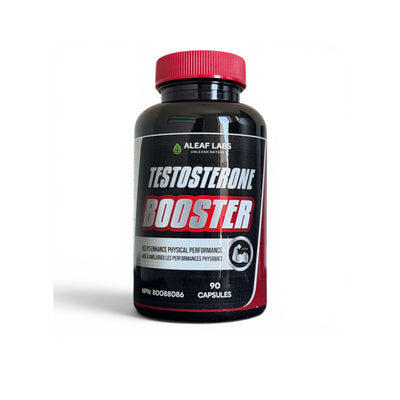
Testosterone replacement therapy and natural health products that support testosterone levels are different categories, governed by different regulatory frameworks and operating through different mechanisms. TRT introduces exogenous testosterone directly into the body. Licensed natural health products — like Aleaf Labs Testosterone Booster, which carries Health Canada NPN 80088086 — are formulated with botanicals that support the body's own hormonal environment.
The TRAVERSE trial findings and the FDA label changes are specific to prescription testosterone therapy. They do not directly apply to natural supplements. But the broader conversation they open — about men's health, about testosterone, about the gap between public perception and scientific evidence — is one that applies to Canadian men across the spectrum of options.
If you're experiencing symptoms associated with low testosterone — fatigue, reduced drive, changes in body composition, difficulty concentrating — the most important first step is a conversation with your physician and a blood draw. From there, your options, both pharmaceutical and natural, deserve to be considered in the context of real evidence.
References
- FDA. FDA issues class-wide labeling changes for testosterone products. February 28, 2025. fda.gov
- Lincoff AM, et al. Testosterone Replacement Therapy and Cardiovascular Risk. New England Journal of Medicine. 2023;389:107–117.
- Khera M. Testosterone and Cardiovascular Risk: TRAVERSE Trial and New FDA Label Change. Grand Rounds in Urology. February 2025.
- FDA Expert Panel. Testosterone Replacement Therapy Label Revisions. December 10, 2025. medpath.com/trial
- Grober ED, et al. Canadian Urological Association guideline on testosterone deficiency in men. PMC8095276. 2021.
- Interactivewellness.com. Testosterone in 2026: Safer Than We Feared, Not as Simple as the Ads. February 2026.