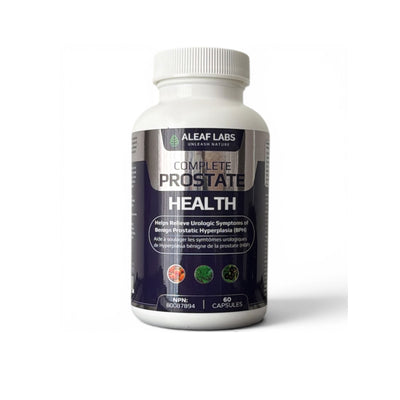
Getting up three or four times a night wrecks the following day, and it is the symptom that finally sends most men to look for something to take. So here is the part most supplement pages leave out, before we get to the ingredients:
Night-time urination has at least four common causes in men, and a prostate supplement addresses one of them. If yours is driven by something else, no botanical on this page will help — and taking one for six months while the real cause goes unaddressed is worse than doing nothing.
So this article starts with how to tell which kind you have, and only then covers what the trial evidence supports. If you want the underlying physiology, we cover it in why men wake up to urinate at night.
First: Which Kind of Nocturia Do You Have?
Nocturia means waking from sleep to urinate. Once a night is common past 60. Twice or more is associated with real impairment — fragmented sleep, daytime fatigue, and increased fall risk in older men.
| Cause | What it looks like | Will a prostate supplement help? |
|---|---|---|
| Bladder outlet obstruction from BPH | Weak stream and incomplete emptying during the day, not just night waking | This is the one with supplement evidence |
| Nocturnal polyuria | Large volumes at night; more than a third of your daily output happens overnight | No — this is fluid timing, circulatory or hormonal |
| Obstructive sleep apnea | Snoring, unrefreshing sleep, daytime sleepiness | No — treating the apnea often resolves the nocturia outright |
| Diabetes or medication | Thirst, large volumes day and night; evening diuretics | No — this needs glycaemic control or a timing change |
There is a simple way to tell them apart, and it costs nothing. Keep a frequency-volume chart for two or three days: note the time and rough volume of every void, day and night. If most of your output is happening overnight, that points to nocturnal polyuria rather than the prostate. Your doctor can read that chart in about a minute, and it is the single most useful thing you can bring to the appointment.
What the Evidence Supports, If It Is Your Prostate
Pygeum (Prunus africana)
The meta-analysis of 18 randomized controlled trials in 1,562 men reported a 19% reduction in nocturia specifically, alongside a 24% reduction in residual urine and a 23% increase in peak flow. Of the botanicals used for urinary symptoms, pygeum is the one with the clearest night-time figure attached to it.
Studied dose: 100–200 mg/day of standardized bark extract.
Ishani et al. — Meta-AnalysisBeta-sitosterol
A Cochrane review of four placebo-controlled trials in 519 men found beta-sitosterol improved IPSS symptom scores by a weighted mean of 4.9 points and increased peak flow. Nocturia is one of the seven questions inside the IPSS, so it is part of that improvement rather than measured separately.
Studied dose: 60–130 mg/day.
Saw palmetto (Serenoa repens)
Eighteen pooled trials showed benefit on symptom scores and flow; two large NIH-funded trials, STEP and CAMUS, found no separation from placebo. The split appears to track with extract standardization. Worth reading the full picture in does saw palmetto work? before you buy on the strength of the name alone.
Studied dose: 320 mg/day standardized.
Stinging nettle root
A trial in 558 men found nettle root at 120 mg twice daily improved IPSS scores, and the saw palmetto plus nettle root combination matched a prescription 5-alpha-reductase inhibitor over 48 weeks. Nettle leaf and herb top are different plant parts and were not what the trials used.
The Non-Supplement Levers That Often Work Better
We sell supplements, so take this in the spirit it is offered: for a lot of men, these move nocturia more than anything in a capsule.
- Shift fluids earlier. Front-load water in the morning and afternoon, and taper after early evening. Alcohol and caffeine in the evening are both diuretic.
- Check the timing of a diuretic. If you take one for blood pressure, ask your doctor whether taking it earlier in the day is appropriate. Do not change it yourself.
- Get apnea assessed if you snore. The negative intrathoracic pressure of obstructive sleep apnea drives atrial natriuretic peptide release, which increases overnight urine production. Treating the apnea frequently resolves the nocturia without any urological treatment at all.
- Elevate the legs in the evening if you have ankle swelling. Fluid that pools in the legs during the day gets reabsorbed and excreted once you lie down.
When to see a doctor rather than order anything
Blood in the urine, fever with back or flank pain, complete inability to urinate, pain on urination, or a rapid change over days rather than months all warrant a call to your doctor first. So does new nocturia alongside unusual thirst or weight loss.
What We Make, and What It Is Licensed to Say
Complete Prostate Health carries Health Canada NPN 80087894 and this authorized claim:
“Used in Herbal Medicine to help relieve the urologic symptoms — weak urine flow, incomplete voiding, frequent daytime and night-time urination — associated with mild to moderate benign prostatic hyperplasia.”
Note the last five words. The licence covers night-time urination associated with BPH — which is precisely the distinction this article opened with. If your nocturia is coming from apnea or nocturnal polyuria, this is not the product for you, and we would rather say so than sell you one.
Per capsule, two capsules daily: saw palmetto 200 mg (10:1), stinging nettle 80 mg (herb top, 10:1), pygeum 25 mg (2.5:1, 13% phytosterols), pumpkin fruit 50 mg, citrus bioflavonoids 30 mg, zinc 15 mg. Our full breakdown, including where our doses sit below the trial ranges above, is in the clinical ingredient review.